Myntra Fashion & Apparel Data Scraping
Myntra Fashion & Apparel Data Scraping for Real-Time Trend Analysis and Competitive Intelligence
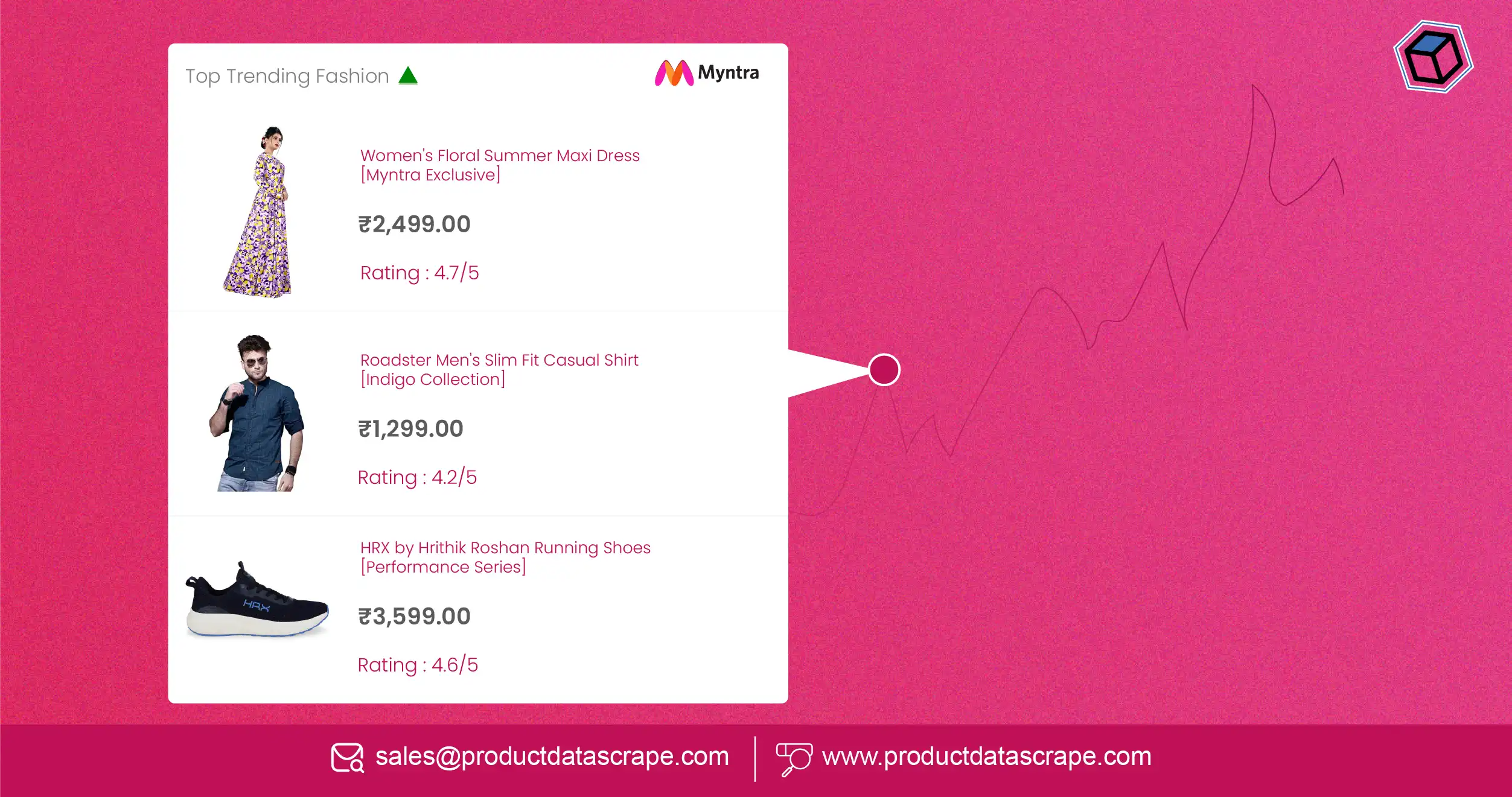
Introduction
Fashion retailers need accurate market insights to track trends, pricing, inventory, and customer demand in real time. Myntra Fashion & Apparel Data Scraping helps businesses collect structured fashion datasets that improve pricing decisions, competitor tracking, and inventory planning.
Industry reports estimate that India’s online fashion market will grow at over 18% CAGR through 2026. Businesses using Extract Myntra E-Commerce Product Data solutions can monitor changing fashion trends, identify high-performing categories, and improve customer engagement through data-driven strategies.
This blog is designed for fashion retailers, marketplace sellers, pricing analysts, and market research firms that want to solve challenges related to dynamic pricing, stock visibility, and trend forecasting in the online apparel industry.
How Can Fashion Retailers Improve Market Visibility?
.webp)
Fashion brands need continuous access to product-level insights to understand changing customer preferences. Myntra Product Data Scraping Services help businesses monitor apparel pricing, discounts, product rankings, and customer demand across categories.
Retailers also use a Myntra E-commerce Product Dataset to analyze category growth, seasonal buying patterns, and product performance across different fashion segments.
Fashion Retail Growth Trends (2020–2026)
| Year | Online Fashion Market Growth | Monthly Active Buyers |
|---|---|---|
| 2020 | 15% | 20 Million |
| 2021 | 23% | 29 Million |
| 2022 | 31% | 38 Million |
| 2023 | 40% | 49 Million |
| 2024 | 49% | 61 Million |
| 2025 | 58% | 74 Million |
| 2026 | 67% | 88 Million |
Key Benefits for Retailers
- Monitor trending products
- Track seasonal collections
- Analyze customer demand
- Improve assortment planning
- Optimize pricing strategies
Retailers can track apparel categories such as ethnic wear, footwear, sportswear, and accessories to identify high-performing products. Real-time product intelligence also helps businesses improve campaign planning and inventory allocation.
Structured fashion datasets support faster decision-making and help brands respond quickly to changing consumer preferences in competitive online marketplaces.
Why Is Product Catalog Monitoring Important for Fashion Brands?
Fashion marketplaces frequently update catalogs with new products, seasonal launches, and promotional campaigns. Businesses use Myntra Clothing & Apparel Product Catalog Scraping to monitor product listings, category updates, and assortment changes efficiently.
Retailers also rely on the Myntra Product Data Scraping API to automate data extraction and integrate product information directly into business intelligence systems.
Product Catalog Expansion Trends (2020–2026)
| Year | Total Fashion Listings | New Product Launches |
|---|---|---|
| 2020 | 1.5 Million | 140,000 |
| 2021 | 2.1 Million | 220,000 |
| 2022 | 2.9 Million | 310,000 |
| 2023 | 3.8 Million | 420,000 |
| 2024 | 4.7 Million | 540,000 |
| 2025 | 5.8 Million | 670,000 |
| 2026 | 7.1 Million | 810,000 |
What Can Businesses Monitor?
- New product launches
- Category-level expansion
- Product ranking changes
- Promotional placements
- Seasonal assortment trends
Fashion brands can monitor how products are displayed across categories and compare listing visibility with competitors. This improves digital merchandising and customer discovery experiences.
Automated product catalog monitoring also reduces manual effort and supports large-scale fashion analytics for retail businesses.
How Does Pricing and Availability Data Improve Retail Decisions?
.webp)
Pricing and stock visibility directly affect customer purchases in fashion eCommerce. Businesses use Extract Myntra Product Price and Availability Data to track product pricing, stock levels, and delivery availability in real time.
Retailers also use a Myntra Quick Commerce Scraper to monitor fast-moving fashion products and identify trends related to same-day or rapid delivery services.
Pricing & Availability Trends (2020–2026)
| Year | Dynamic Pricing Adoption | Stock Accuracy |
|---|---|---|
| 2020 | 12% | 74% |
| 2021 | 19% | 79% |
| 2022 | 27% | 84% |
| 2023 | 36% | 89% |
| 2024 | 45% | 92% |
| 2025 | 54% | 95% |
| 2026 | 63% | 98% |
Benefits of Real-Time Tracking
- Monitor stock availability
- Identify price fluctuations
- Improve replenishment planning
- Track delivery performance
- Reduce stock shortages
Fashion retailers can detect out-of-stock products early and improve inventory allocation across warehouses. Real-time pricing visibility also helps businesses optimize discounts and maintain competitiveness during sales campaigns.
Data-driven inventory and pricing insights improve customer satisfaction while reducing operational inefficiencies.
How Can Inventory Intelligence Improve Supply Chain Efficiency?
Fashion retailers manage thousands of SKUs across multiple brands and categories. Businesses use Myntra Inventory and Stock Data Scraping to monitor inventory levels, replenishment frequency, and warehouse availability across locations.
Retailers also rely on Pricing Intelligence Services to evaluate pricing consistency and competitor discounting strategies across apparel categories.
Inventory Optimization Trends (2020–2026)
| Year | Inventory Accuracy | Out-of-Stock Reduction |
|---|---|---|
| 2020 | 70% | 8% |
| 2021 | 76% | 14% |
| 2022 | 82% | 20% |
| 2023 | 87% | 27% |
| 2024 | 91% | 35% |
| 2025 | 95% | 42% |
| 2026 | 98% | 50% |
Why Inventory Intelligence Matters
- Reduce overstocking risks
- Improve warehouse planning
- Increase product availability
- Support demand forecasting
- Enhance customer experience
Inventory intelligence helps retailers identify fast-selling SKUs and allocate stock more efficiently. Businesses can also compare stock trends across different regions and improve fulfillment performance.
Accurate inventory monitoring strengthens supply chain operations and improves overall retail profitability.
How Does Real-Time Fashion Analytics Help Brands Stay Competitive?
.webp)
Fashion trends change rapidly due to influencer marketing, seasonal campaigns, and evolving customer preferences. Businesses use Myntra Real-Time Fashion Data Extraction to identify trending products, monitor category demand, and evaluate pricing movements instantly.
Retailers also use Digital Shelf Analytics to understand product visibility, promotional placements, and ranking performance across online marketplaces.
Fashion Analytics Adoption Trends (2020–2026)
| Year | Businesses Using Analytics | Conversion Rate Improvement |
|---|---|---|
| 2020 | 24% | 9% |
| 2021 | 33% | 14% |
| 2022 | 44% | 20% |
| 2023 | 56% | 27% |
| 2024 | 68% | 34% |
| 2025 | 77% | 41% |
| 2026 | 85% | 49% |
What Can Brands Analyze?
- Product ranking visibility
- Promotional campaign impact
- Customer engagement patterns
- Trending fashion categories
- Competitor assortment strategies
Digital shelf insights help retailers optimize product placements and improve customer discovery experiences. Businesses can also monitor how competitor products gain visibility during promotional events.
Real-time analytics improve marketing strategies and support faster business decisions in competitive fashion markets.
Why Is Marketplace Data Essential for Long-Term Fashion Growth?
Marketplace intelligence helps fashion businesses identify growth opportunities and monitor evolving customer demand patterns. Companies use Myntra Online Fashion Store Data Scraping to analyze product listings, category performance, and market expansion trends.
Retailers can evaluate pricing structures, inventory movement, and promotional strategies using large-scale fashion datasets. This improves strategic planning and retail forecasting.
Marketplace Growth Trends (2020–2026)
| Year | Marketplace Revenue Growth | Fashion SKU Expansion |
|---|---|---|
| 2020 | 13% | 11% |
| 2021 | 21% | 18% |
| 2022 | 29% | 26% |
| 2023 | 37% | 34% |
| 2024 | 46% | 42% |
| 2025 | 55% | 51% |
| 2026 | 64% | 60% |
Key Marketplace Insights
- Category-level demand trends
- Regional pricing differences
- Product assortment expansion
- Seasonal campaign performance
- Consumer buying behavior analysis
Marketplace data helps businesses launch better pricing strategies and improve product positioning across fashion categories.
Retailers that leverage structured datasets can identify emerging fashion opportunities and strengthen long-term competitive positioning.
Why Choose Product Data Scrape?
Businesses require scalable and accurate fashion intelligence solutions to stay competitive in online retail markets. Extract Myntra Fashion & Apparel Data services help brands access structured pricing, inventory, and product trend datasets for better decision-making.
With expertise in Myntra Fashion & Apparel Data Scraping, we deliver automated data extraction solutions tailored for fashion retailers, marketplace sellers, and analytics firms.
The company provides real-time fashion insights, inventory intelligence, competitor monitoring, and scalable retail analytics solutions that improve pricing strategies and operational efficiency.
Conclusion
Online fashion retailers rely on accurate market intelligence to monitor trends, pricing, inventory, and customer demand effectively. Web Scraping for Fashion & Apparel Data enables businesses to automate data collection and improve operational performance using structured retail datasets.
By leveraging Myntra Fashion & Apparel Data Scraping, brands can optimize inventory planning, improve pricing strategies, and track competitor performance in real time. Businesses that invest in data-driven retail analytics gain stronger market visibility and better customer engagement.
Partner with Product Data Scrape today to unlock scalable fashion intelligence solutions and transform your retail strategy with accurate real-time market insights!
FAQs
1. What is Myntra fashion data scraping?
Myntra fashion data scraping collects product listings, pricing, inventory, discounts, and trend insights from Myntra to help retailers improve market intelligence and pricing strategies.
2. Why do fashion brands monitor competitor pricing?
Fashion brands monitor competitor pricing to optimize discounts, maintain profitability, improve promotional strategies, and remain competitive in fast-changing online fashion marketplaces.
3. How does inventory data help online retailers?
Inventory data helps retailers track stock levels, improve replenishment planning, reduce stock shortages, and optimize warehouse operations for better customer satisfaction.
4. What is digital shelf analytics in fashion retail?
Digital shelf analytics tracks product visibility, rankings, promotional placements, and assortment performance to improve customer discovery and optimize online merchandising strategies.
5. Why choose Product Data Scrape for fashion analytics?
Product Data Scrape provides scalable retail data extraction, competitor intelligence, inventory analytics, and real-time fashion insights tailored for eCommerce businesses and fashion retailers.
Source : https://www.productdatascrape.com/myntra-fashion-apparel-data-scraping.php
Originally published at https://www.productdatascrape.com
#MyntraFashionAndApparelDataScraping,
#MyntraProductDataScrapingServices,
#MyntraClothingAndApparelProductCatalogScraping,
#ExtractMyntraProductPriceAndAvailabilityData,
#MyntraInventoryAndStockDataScraping,
#MyntraRealTimeFashionDataExtraction,
#MyntraOnlineFashionStoreDataScraping,
📩 Email: info@productdatascrape.com
📞 Call or WhatsApp: +1 424 3777584


Comments
Post a Comment